AI Governance

7 Best AI Agent Governance Platforms to Govern the Agent Lifecycle in 2026

Share via:
Written by:
CloudEagle.ai Team
Reviewed by
Nidhi Jain
Last Updated:
November 16, 2026
blog-cms-banner-bg
Little-Known Negotiation Hacks to Get the Best Deal on Slack
cta-bg-blogDownload Your Copy

HIPAA Compliance Checklist for 2025

Download PDF

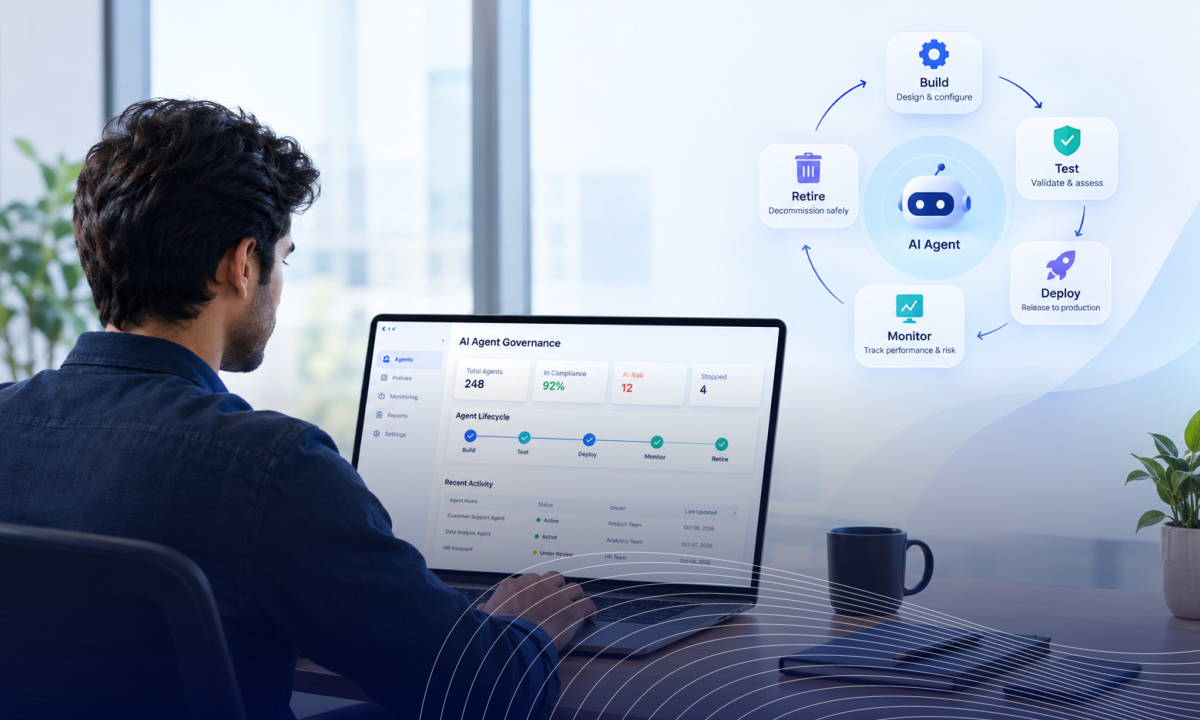
AI agents are becoming part of everyday enterprise workflows, from automating business processes to handling customer interactions and accessing internal systems. As adoption grows, organizations need a way to discover these agents, understand their access, track their activity, and manage the risks they introduce.

The challenge is that agents are created across multiple environments, including Copilot Studio, Salesforce Agentforce, low-code platforms, and custom frameworks. Without centralized oversight, organizations can lose track of agent ownership, permissions, and lifecycle changes.

AI agent governance platforms help address these challenges. This guide compares seven platforms based on their ability to manage the AI agent lifecycle, from discovery and access governance to monitoring and retirement.

‍

1. What Are the 7 Best AI Agent Governance Platforms in 2026?

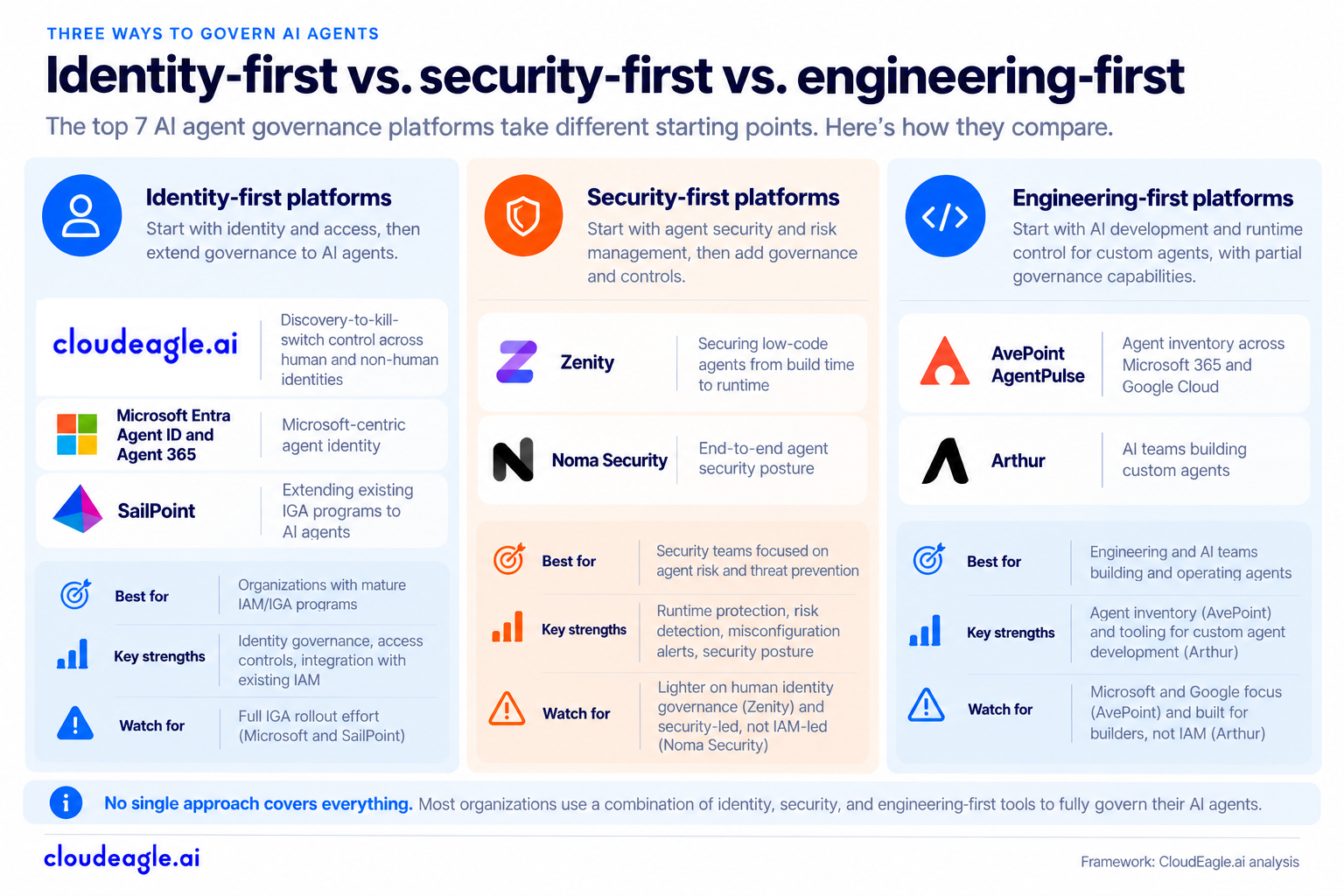
The best AI agent governance platforms in 2026 are CloudEagle.ai, Microsoft Entra Agent ID and Agent 365, SailPoint, Zenity, Noma Security, AvePoint AgentPulse, and Arthur. They differ most in whether they start from identity, security, or AI engineering.

‍

Platform Best For Starting Point Watch For
CloudEagle.ai Discovery-to-kill-switch control across human and non-human identities Identity and SaaS access No runtime threat detection
Microsoft Entra Agent ID and Agent 365 Microsoft-centric agent identity Identity (Microsoft) Strongest on Microsoft-built agents
SailPoint Extending existing IGA programs to AI agents Identity governance Full IGA rollout effort
Zenity Securing low-code agents from build time to runtime Agent security Lighter on human identity governance
Noma Security End-to-end agent security posture AI security Security-led, not IAM-led
AvePoint AgentPulse Agent inventory across Microsoft 365 and Google Cloud Data governance Microsoft and Google focus
Arthur AI teams building custom agents AI engineering Built for builders, not IAM

‍

We left out LLM gateways and evaluation tools. They control live agent traffic, but they don't handle discovery, ownership, or offboarding.

‍

2. How Did We Evaluate These Platforms?

We scored each platform on how well it covers the six stages of the AI agent lifecycle:

  • Discovery: does it find agents nobody registered?
  • Ownership: does it tie each agent to a named human?
  • Access: can it show and cut back what each agent can reach?
  • Monitoring: does it record what agents actually do?
  • Review: can agents go through access reviews like employees?
  • Retirement: can it revoke, deactivate, or reassign an agent when its job or owner is gone?

We used published product pages, vendor announcements, and documentation, not paid rankings.

‍

Worth a Read: Why Your AI Agents End Up With More Access Than Your Security Team 

‍

3. Which AI Agent Governance Platforms Cover the Full Lifecycle?

The platforms that cover the full lifecycle connect discovery to action. They find the agent, show its owner and access, and let you fix or stop it from the same place.

Most tools on this list cover some stages deeply and others lightly.

1. CloudEagle.ai: Best for Discovery-to-Kill-Switch Control Across Human and Non-Human Identities

CloudEagle.ai is an AI-powered AI Governance, SaaS Management, and Identity Governance platform. Its AI agent security capabilities extend identity governance to AI agents, service accounts, API tokens, and other non-human identities.

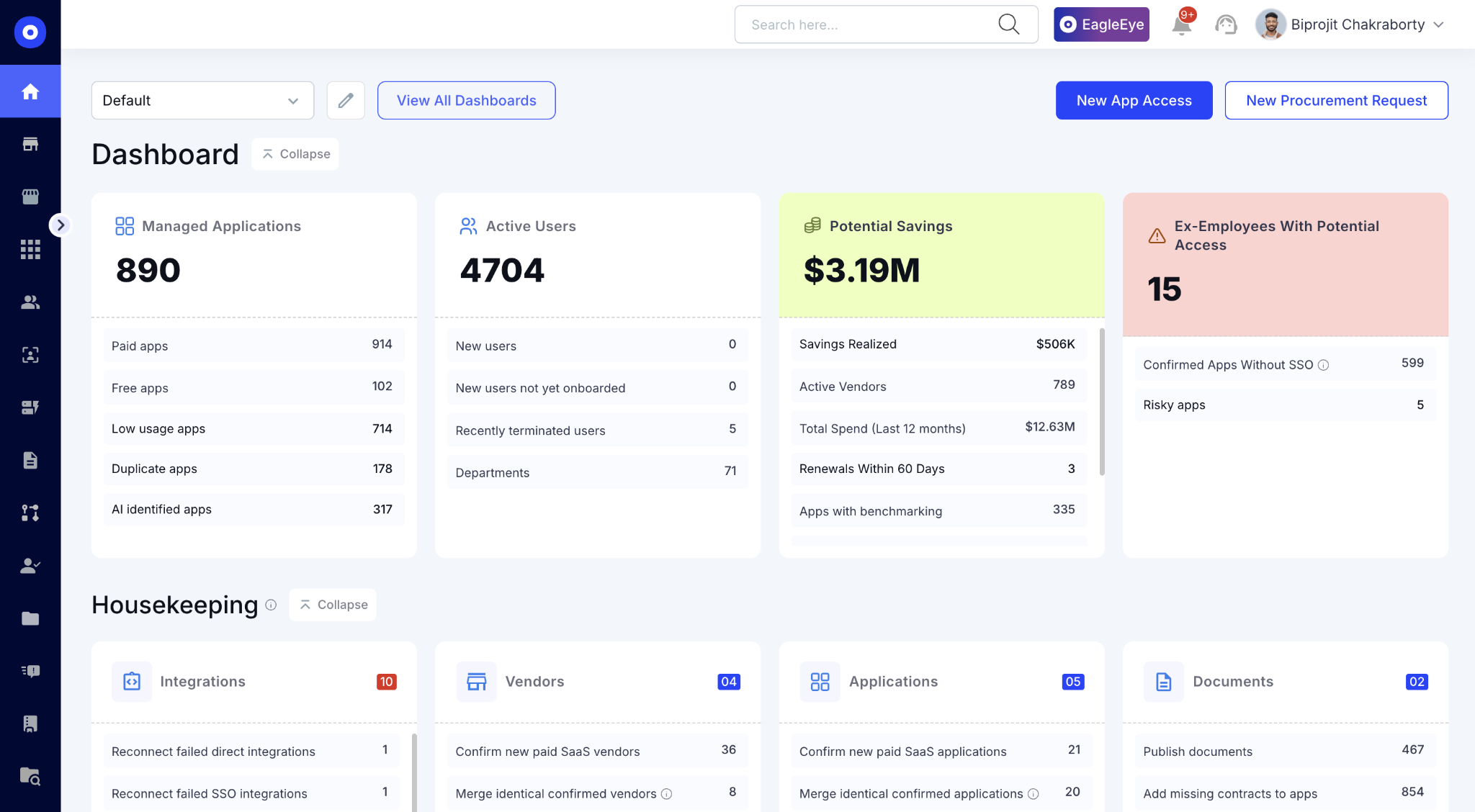
Rather than managing agents separately from employee access, CloudEagle brings them into a shared inventory. Security and IAM teams can identify agents, map them to owners, review their permissions, and take action on risky or unmanaged identities.
‍

‍

Best for: Security and IAM teams that want centralized discovery, ownership, and access governance for AI agents and other non-human identities.

Key features

  1. Centralized agent discovery: Identifies machine identities across Microsoft Entra ID, Okta, and connected applications. This helps teams find agents even when they have not been formally registered.
  2. Agent inventory and ownership: Brings agents into a central inventory with their status, credentials, and associated owner. Teams can identify agents with no assigned owner or those that have been inactive for extended periods.
  3. Agent permission visibility: Shows the applications and data sources an agent can access, including the roles and permissions assigned to it. This helps security teams identify excessive or unnecessary access.
  4. Least-privilege enforcement: Allows administrators to revoke unnecessary roles and reduce permissions an agent no longer needs. Teams can also identify agents that retain access after their owners leave the organization.
  5. Agent kill switch: Administrators can revoke an agent's role, rotate its secret, or deactivate its identity through a centralized control. The available action depends on the connected integration and its supported APIs.
  6. Audit-ready activity logs: Records agent activity and access changes, with actions linked to the associated identity and owner. This gives security teams an audit trail for governance and investigation.

Pros

  • Connects agent governance with identity governance: The platform manages AI agents alongside human identities, service accounts, and SaaS access. This can reduce the need to manage separate inventories for different identity types.
  • Provides remediation controls, not just discovery: Administrators can revoke roles, rotate secrets, and deactivate agent identities through the kill switch.
  • Demonstrated NHI governance outcomes: Armorcode increased NHI visibility from 40% to 95% and remediated 480 unmanaged identities after implementing CloudEagle.ai.

Cons

  • Not a substitute for runtime threat detection: Its core strength is identity discovery and access governance. Organizations that need to detect malicious agent behavior or block individual actions at runtime may need a dedicated runtime security platform.
  • Remediation depends on integrations: The actions available for an agent depend on the connected application's APIs and integration capabilities. Teams should validate support for their specific agent environments before deployment.

Recognition

- Named a Leader in the 2026 Gartner Magic Quadrant for SaaS Management Platforms.

- Named in the Gartner Market Guide for Software Asset Management Tools under SAM tools for SaaS.

- Named a Product Leader in KuppingerCole's 2026 Leadership Compass for SaaS Security and AI Governance.

Ratings

  • G2: 4.7/5 from 107 reviews. Reviewers have praised its SaaS visibility, access management, and support. These reviews cover CloudEagle's broader platform, not exclusively its AI Agent Security capabilities. 
  • Gartner Peer Insights: 4.5/5 from 92 ratings. Reviewers have highlighted audit readiness, access tracking, and compliance workflows. These ratings also relate to the broader CloudEagle platform.

CloudEagle.ai Pricing: Available at module-based custom pricing. A free trial is available.

‍

‍

2. Microsoft Entra Agent ID and Agent 365: Best for Microsoft-Centric Agent Identity

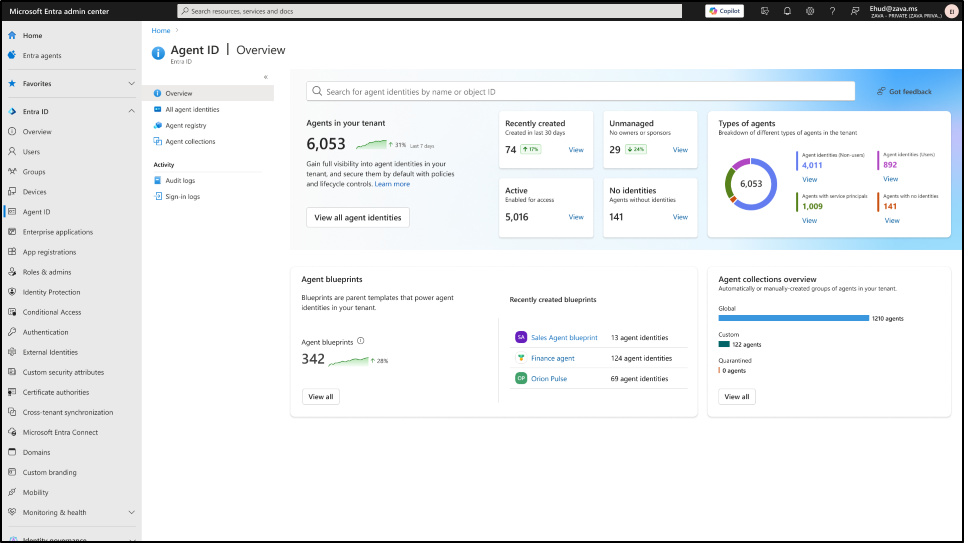
Microsoft Entra Agent ID and Agent 365 extend Microsoft's identity and administration capabilities to AI agents. Each agent can receive an identity that organizations can use to manage its access, lifecycle, and security policies.
‍

‍

Best for: Organizations that primarily build and operate agents through Microsoft Copilot Studio, Microsoft Foundry, and other Microsoft services.

Key features

  1. Agent identity provisioning: Assigns agents their own Microsoft Entra Agent ID, giving them a distinct identity instead of treating them as ordinary user accounts.
  2. Centralized agent registry: Provides a catalog of agents that administrators can use to understand which agents exist across their environment.
  3. Lifecycle management: Helps administrators observe and manage agents throughout their lifecycle, including their creation, activity, and access.
  4. Conditional Access: Extends Microsoft's identity security policies to agents, helping organizations apply access conditions to agent identities.
  5. Identity risk protection: Uses Microsoft Entra security capabilities to help identify and manage risks associated with agent identities.
  6. Microsoft security integration: Connects agent governance with Microsoft Defender, Intune, and Purview, supporting broader security, device, data, and compliance workflows. 

Pros

  • Native integration with Microsoft's identity stack: Organizations already using Entra, Microsoft 365, and Defender can extend existing identity and security workflows to agents.
  • Dedicated identities for agents: Assigning agents their own identities gives administrators a clearer way to manage agent access separately from human users.
  • Third-party agent coverage: Gartner's product description states that Agent 365 can govern agents built on Microsoft platforms as well as agents developed or acquired from third-party sources. 

Cons

  • Microsoft ecosystem dependency: Organizations with agents spread across several cloud providers and development platforms should validate how much visibility and control they get outside Microsoft's ecosystem.
  • Additional licensing considerations: Advanced agent governance requires Agent 365 or an eligible Microsoft 365 E7 subscription, which may add licensing costs for organizations that do not already have the required plan.

Ratings

  • Gartner Peer Insights: 4.5/5 from 91 ratings. Reviewers have praised Microsoft's integration with its security and compliance ecosystem, including Purview, audit logging, and data protection capabilities. Some feedback points to difficulty troubleshooting unclear agent errors. 
  • G2: A separate, directly comparable Agent 365 rating was not available in the sources reviewed.

Microsoft Entra Pricing: Agent 365 is priced at $15 per user per month as a standalone subscription. It is also included with Microsoft 365 E7. 

3. SailPoint: Best for Extending Existing IGA Programs to AI Agents

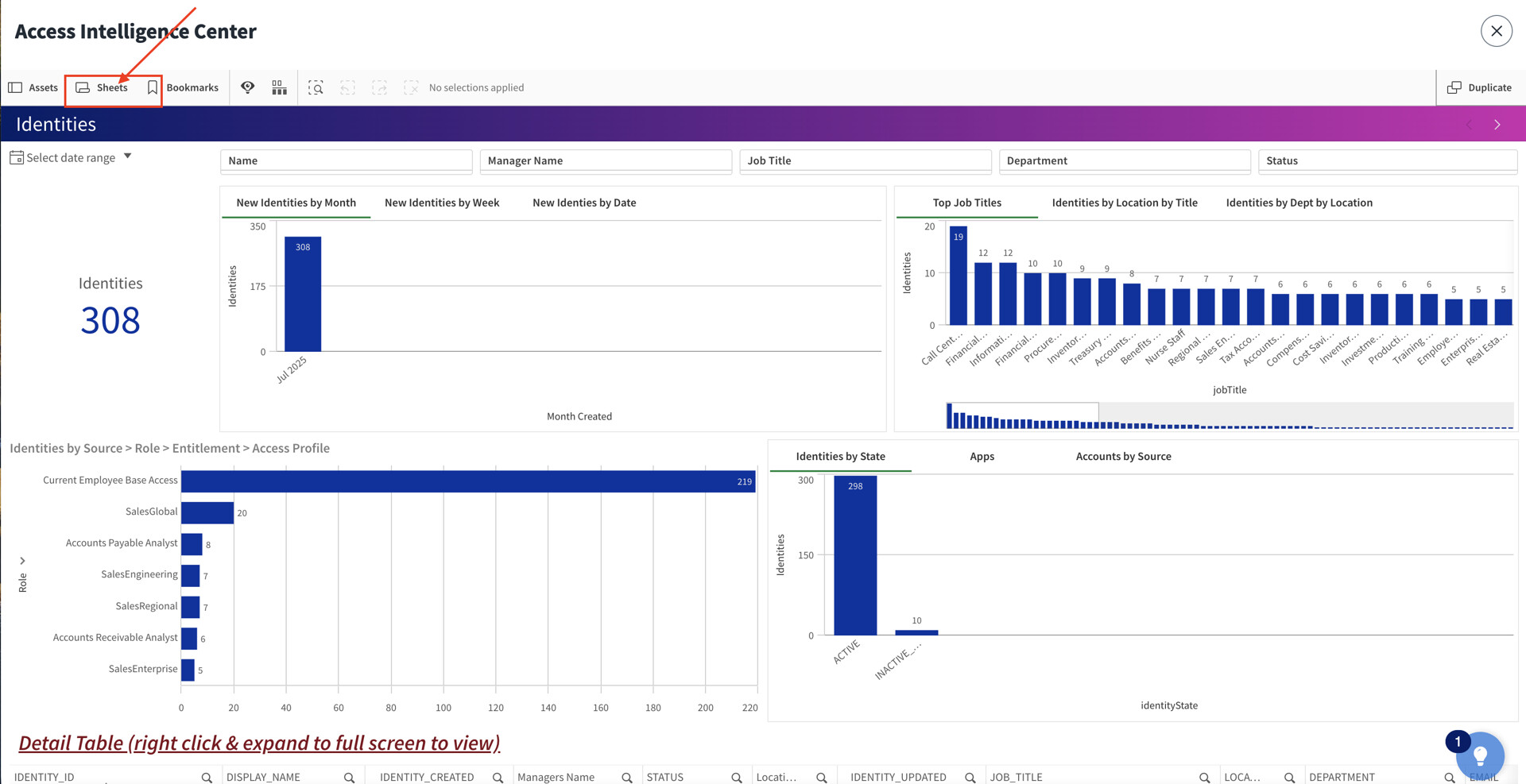
SailPoint extends its identity security platform to AI agents through Agentic Fabric. The product brings agents, machine accounts, and human identities into a common identity governance environment.
‍

Best for: Large enterprises already using SailPoint for identity governance that want to extend their existing program to AI agents and other non-human identities.

Key features

  1. Agent and NHI discovery: Uses endpoint and browser-based discovery capabilities to identify agents, machine accounts, credentials, and MCP servers across enterprise environments.
  2. Identity and ownership mapping: Connects discovered agents to their human owners and helps establish responsibility for identities that may otherwise be unmanaged.
  3. Centralized identity registry: Brings agent and non-human identity information into a shared governance environment, giving teams a consolidated view of their identity estate.
  4. Automated ownership rules: Supports ownership assignment and governance group mapping to help organizations manage identities at scale.
  5. Agent access governance: Extends identity governance processes to agent identities, helping teams manage access and apply governance policies.
  6. Lifecycle controls: Supports agent onboarding, ownership changes, and deactivation workflows through the broader identity security platform. SailPoint Agentic Fabric documentation SailPoint Agentic Fabric announcement

Pros

  • Discovers agents across multiple environments: Endpoint and browser sensors help identify agents, credentials, and MCP servers that may not appear in conventional identity directories. SailPoint documentation
  • Connects agents to human owners: Ownership mapping gives organizations a way to establish accountability for non-human identities.
  • Fits existing IGA programs: Organizations already using SailPoint can extend established identity governance processes to AI agents rather than introducing an entirely separate governance system.

Cons

  • Enterprise implementation requirements: SailPoint is a full identity governance platform. Organizations without an existing IGA program may face a larger deployment and configuration effort.
  • Pricing is not transparent: SailPoint uses custom enterprise pricing, making it difficult for smaller teams to estimate the cost before engaging with its sales team.

Ratings

  • Gartner Peer Insights: 4.7/5 from 889 ratings for SailPoint's broader IGA offering. Reviewers have highlighted identity governance capabilities, access certification, and enterprise identity management. 
  • G2: SailPoint's broader identity governance products receive feedback around automation, integrations, and access reviews. Reviewers also mention implementation complexity and support responsiveness. These reviews should not be interpreted as ratings for Agentic Fabric specifically. 

SailPoint Pricing: SailPoint Agentic Fabric is available at custom enterprise pricing.

‍

4. Zenity: Best for Securing Low-Code Agents From Build Time to Runtime

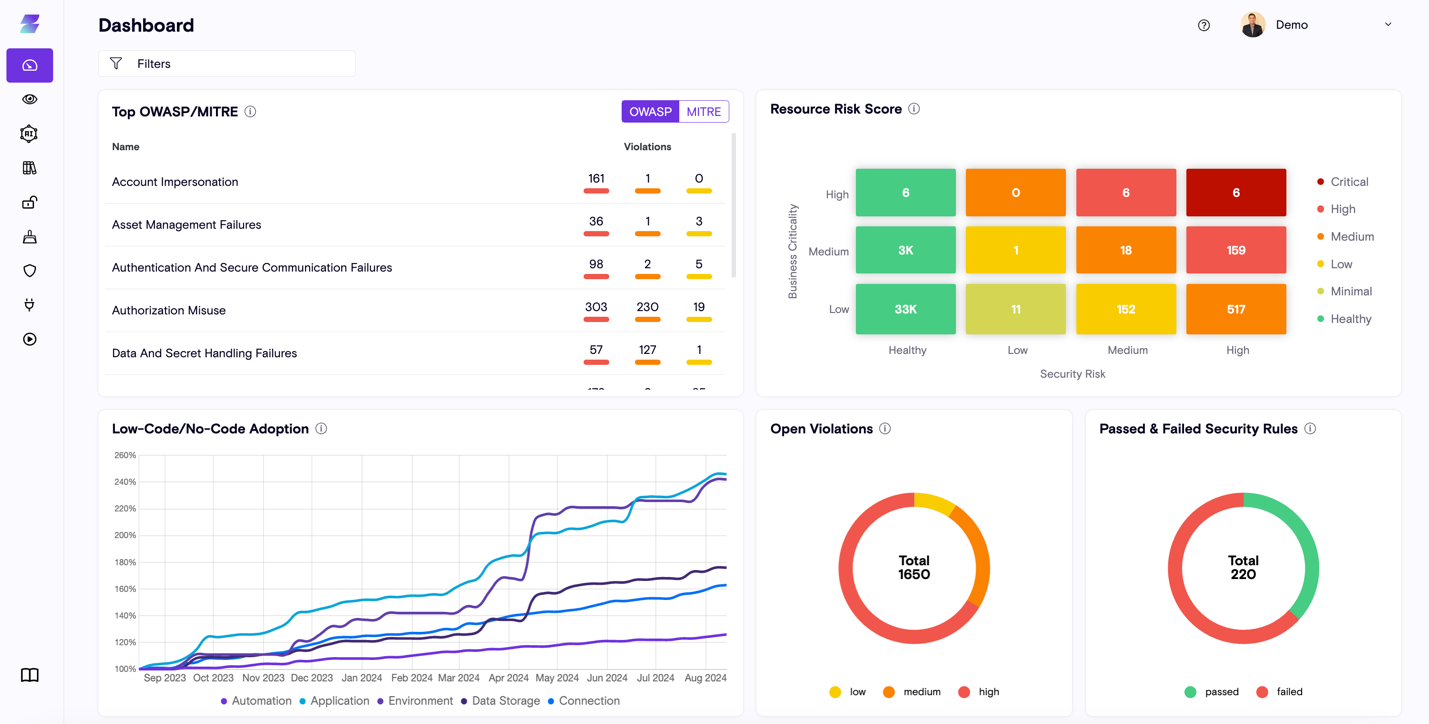
Zenity focuses on securing AI agents and low-code applications across enterprise environments. Its platform helps organizations identify risks during agent development and monitor agents after deployment.
‍

‍

Best for: Security teams that need to secure agents built through Copilot Studio and other low-code platforms, with controls spanning development and runtime.

Key features

  1. AI security posture management: Identifies risky agent configurations and security weaknesses before agents are deployed.
  2. Low-code agent discovery: Helps security teams identify agents created through low-code and SaaS environments, including platforms used by business teams.
  3. Build-time guardrails: Applies security controls during agent development to help prevent risky configurations from reaching production.
  4. Runtime threat detection: Monitors agents while they operate and identifies suspicious or potentially harmful behavior.
  5. Inline prevention: Supports blocking or preventing risky activity as agents execute, rather than relying only on alerts after an incident.
  6. Security visibility across environments: Gives security teams a view of AI and low-code application risks across connected enterprise environments. 

Pros

  • Covers both development and runtime security: Zenity's approach helps teams identify configuration risks before deployment and monitor agents after they go live.
  • Supports low-code environments: Its Copilot Studio security capabilities are useful for organizations where employees create agents outside traditional engineering teams.
  • Provides runtime prevention: Inline controls can help security teams respond to risky agent behavior while an agent is operating.

Cons

  • Not a full identity governance replacement: Teams that need employee access reviews, identity lifecycle management, and comprehensive offboarding will likely need an IAM or IGA platform alongside Zenity.
  • Limited public review volume: The available Gartner Peer Insights rating is based on a small number of reviews, so it offers limited evidence of customer experience across different deployment sizes.

Ratings

  • Gartner Peer Insights: 4.8/5 from 6 ratings in AI Security and Anomaly Detection. Reviewers have highlighted visibility into AI and low-code applications, governance, and the ability to identify security issues early. Gartner Peer Insights
  • G2: A sufficiently established, directly comparable G2 rating for Zenity's agent governance capabilities was not available in the sources reviewed.

Zenity Pricing: Zenity Platform is available at custom pricing.

5. Noma Security: Best for End-to-End Agent Security Posture

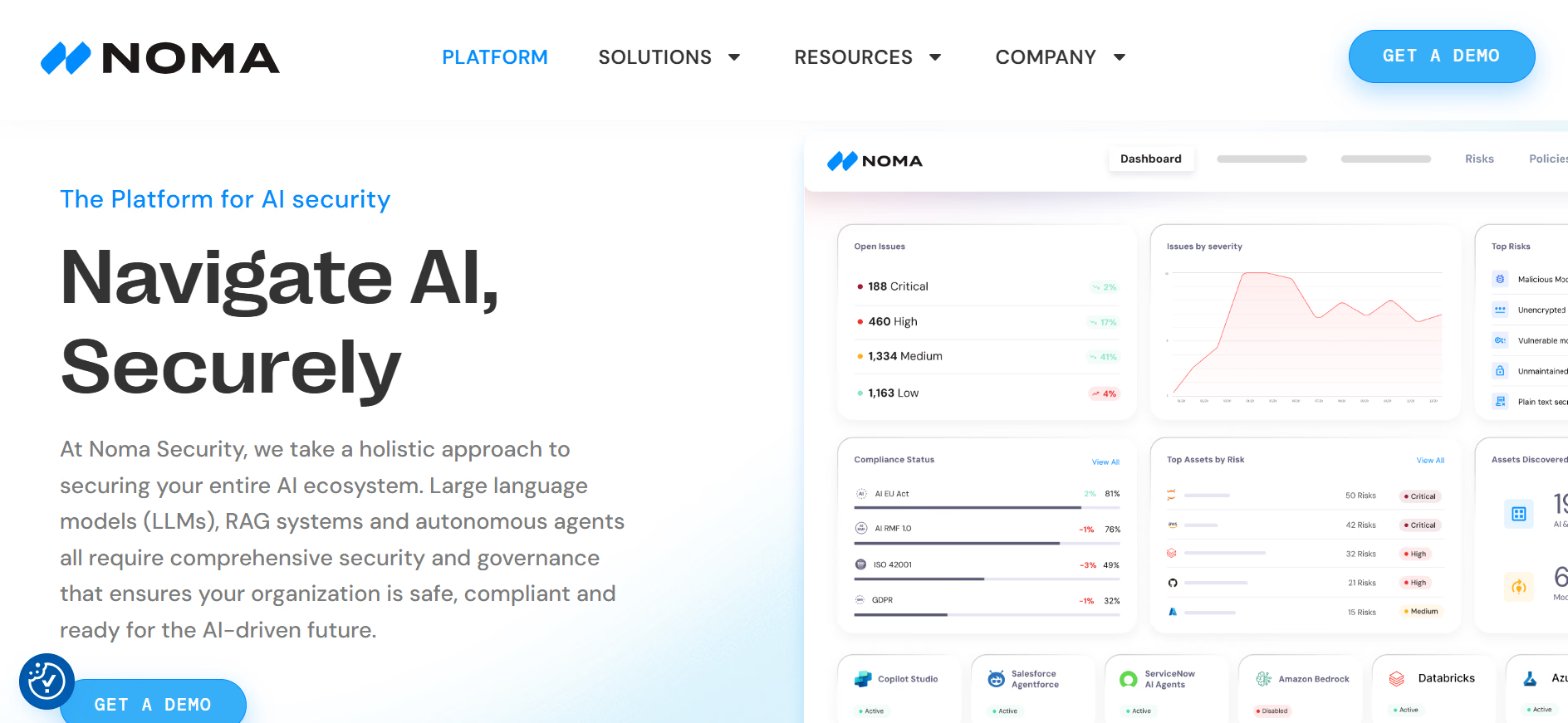
Noma Security combines AI security posture management, application security, governance, and dedicated agent security capabilities. Its platform helps organizations identify AI assets across cloud environments, development pipelines, and agent platforms.
‍

‍

Best for: Security teams that want to assess and control AI and agent risks across development environments, cloud infrastructure, and runtime connections.

Key features

  1. AI and agent discovery: Identifies AI agents, models, MCP servers, and skills across connected environments, helping security teams build an inventory of AI assets.
  2. AI security posture management: Assesses AI environments for security weaknesses and misconfigurations that could expose data or create unauthorized access paths.
  3. Agent access control: Supports approval, review, and blocking of agents, MCP servers, and skills based on organizational policies.
  4. Identity-aware policies: Applies controls using user, team, and identity context, helping organizations determine which agents and connections should be allowed.
  5. Runtime enforcement: Enforces policies around agent connections and actions, helping security teams prevent unauthorized activity.
  6. Risk remediation and response: Helps teams investigate agent risks and stop unauthorized or potentially harmful actions through centralized controls. Noma Agent Access Control Noma AI-SPM documentation

Pros

  • Combines AI posture management with agent controls: Organizations can assess risks across AI assets while also governing agent access and connections.
  • Supports identity-aware access policies: Controls can be based on user and team context, helping organizations apply different rules to different agents and users.
  • Includes runtime enforcement: Noma's access control capabilities can block unauthorized agent connections and actions rather than relying only on discovery and reporting. Noma product documentation

Cons

  • Security-led rather than IGA-led: Organizations that need formal employee access certifications, joiner-mover-leaver workflows, and human identity governance may need a separate IGA platform.
  • Limited public review evidence: There is not yet a substantial public G2 or Gartner review base for evaluating customer experience with Noma's agent governance capabilities.

Ratings

  • Gartner Peer Insights: No substantial product-specific rating was available in the sources reviewed.
  • G2: A sufficiently established product-specific rating was not available in the sources reviewed.

Noma Security Pricing: Noma Security Agent Access Control is available at custom pricing.

‍

6. AvePoint AgentPulse: Best for Agent Inventory Across Enterprise Cloud Environments

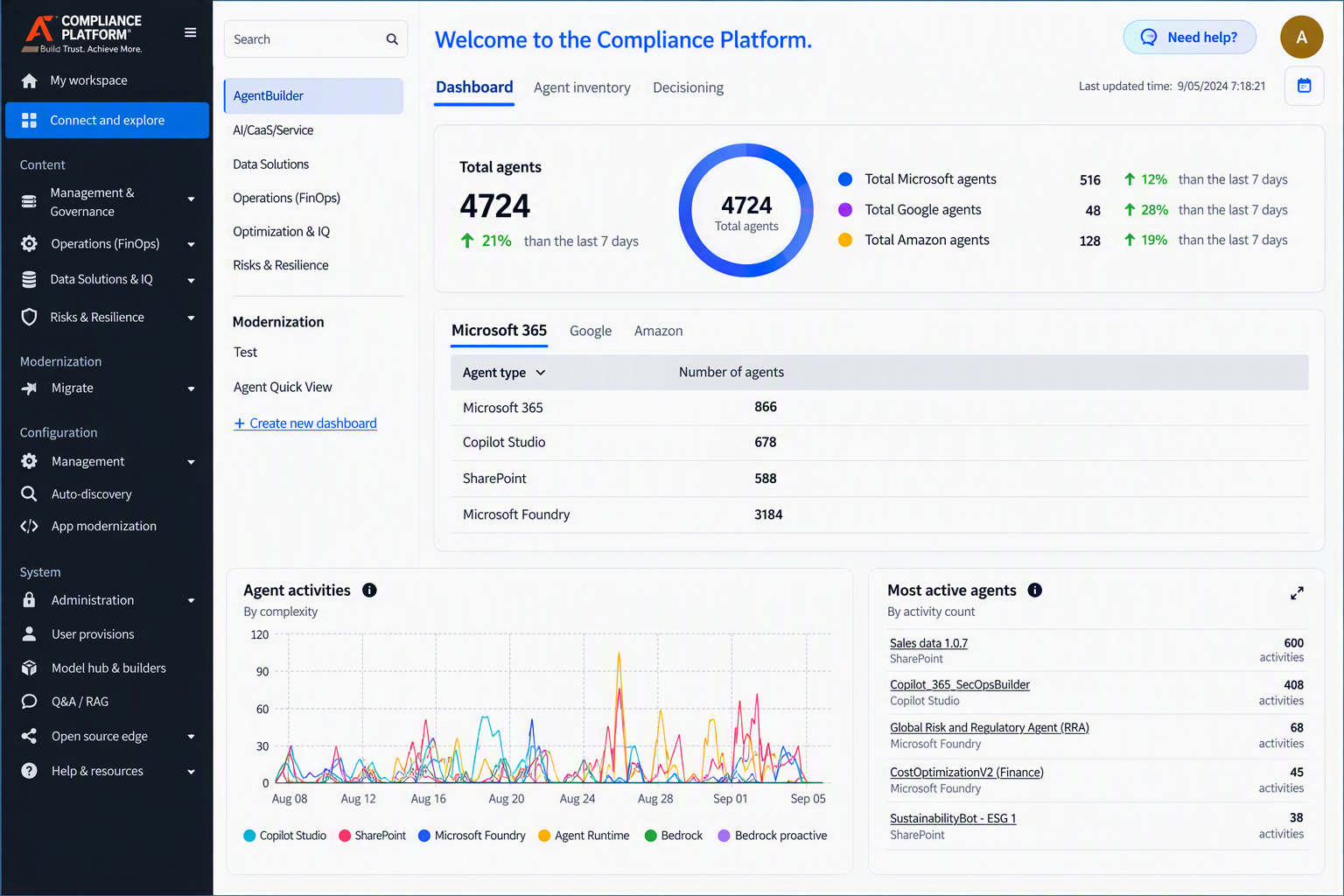
AvePoint AgentPulse extends the company's data governance capabilities to AI agents. Its AgentPulse Command Center gives IT and security teams a centralized view of agents across supported platforms, including Microsoft, Google, Salesforce, and other cloud environments.
‍

‍

Best for: Organizations using AvePoint for data governance that want centralized agent visibility and lifecycle controls across supported enterprise platforms.

Key features

  1. Cross-platform agent inventory: Discovers agents across supported environments, including Microsoft Copilot Studio, Microsoft Foundry, Google services, Salesforce Agentforce, and Amazon Bedrock.
  2. Agent activity visibility: Tracks agent creation and usage to help administrators understand which agents are active and how they are being used.
  3. Data access visibility: Helps teams understand which enterprise data agents can access, supporting risk assessment and governance decisions.
  4. Agent governance policies: Provides controls for managing agent configurations and applying governance requirements across supported environments.
  5. Usage and cost tracking: Gives organizations visibility into agent usage and costs associated with supported pay-per-use AI services.
  6. Lifecycle management: Supports governance workflows for managing agents as they are created, used, and retired. Feature availability can vary by platform and subscription. AvePoint AgentPulse documentation

Pros

  • Supports multiple agent ecosystems: AgentPulse documentation lists integrations across Microsoft, Google, Salesforce, Amazon, and Claude environments, giving it broader coverage than a Microsoft-only inventory.
  • Combines inventory with governance: Teams can use the Command Center to understand their agent estate and apply governance controls from a central environment.
  • Connects agent governance with data governance: Organizations already using AvePoint can extend their existing data governance approach to agent activity and access.

Cons

  • Feature availability varies by environment: Supported agent types, available data, and governance capabilities depend on the connected platform, subscriptions, and APIs.
  • Broader AvePoint ratings are not AgentPulse ratings: Public customer reviews largely cover the AvePoint Confidence Platform and its wider data governance capabilities, so they do not establish customer satisfaction with AgentPulse specifically.

Ratings

  • Gartner Peer Insights: 4.6/5 from 187 ratings for AvePoint in Data Security Posture Management. Reviewers have praised its integrated governance and data protection capabilities. These ratings are for AvePoint's broader offering, not AgentPulse. 
  • G2: 4.5/5 from 123 reviews for AvePoint Confidence Platform. Reviewers have praised ease of use, implementation, and cloud data protection. These reviews do not specifically evaluate AgentPulse. 

AvePoint AgentPulse Pricing: Available through AvePoint's Agent Essentials and Agent Plus offerings. Pricing depends on the selected subscription and required capabilities.

‍

7. Arthur: Best for AI Teams Building Custom Agents

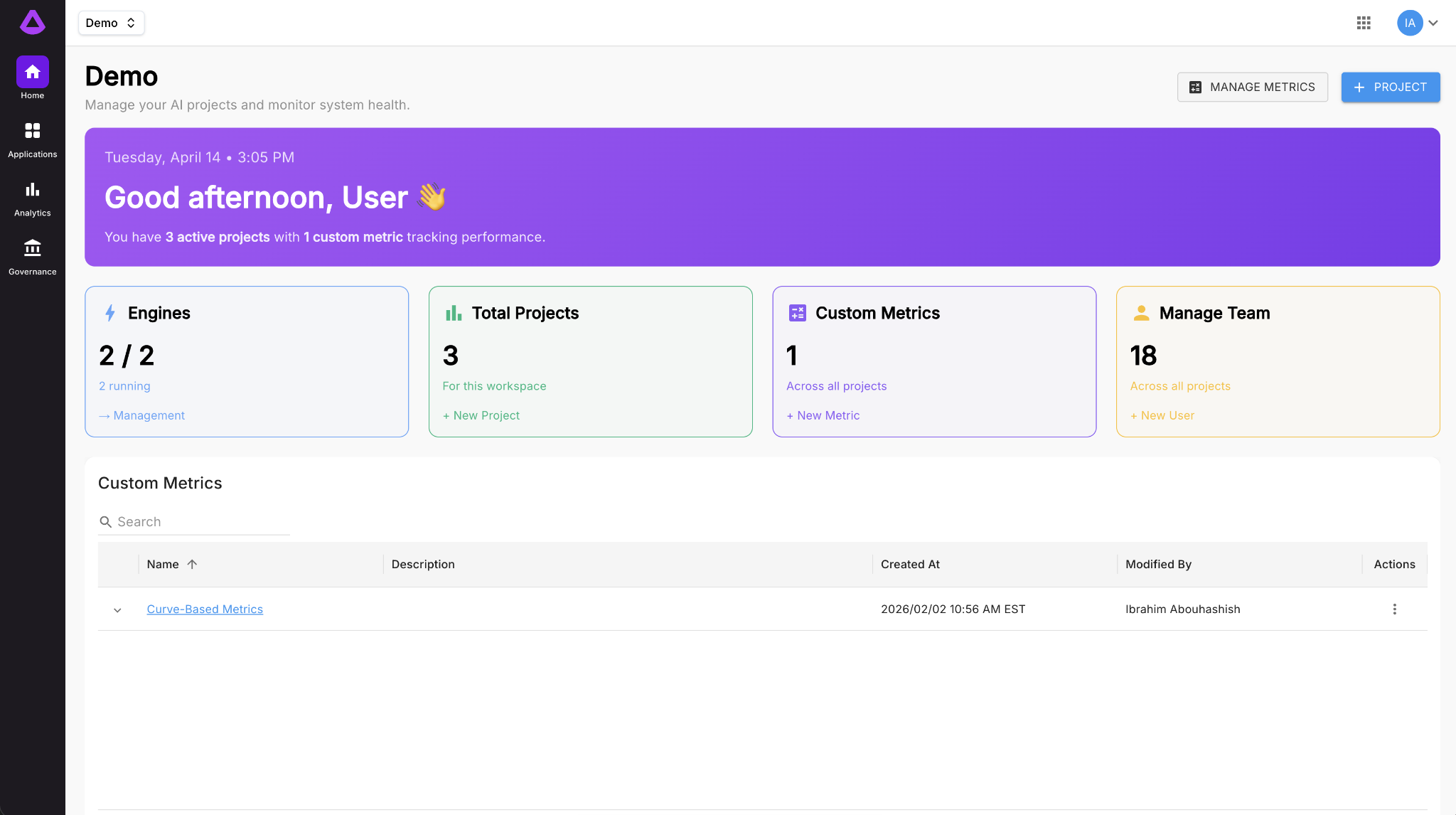
Arthur provides AI evaluation, observability, and governance tools for organizations building and deploying AI systems. Its Agent Discovery capabilities help teams identify agents across cloud infrastructure, development environments, and employee endpoints. 
‍

‍

Best for: AI and ML engineering teams building custom agents across cloud AI platforms that need discovery, evaluation, and observability.

Key features

  1. Agent discovery across cloud environments: Scans supported cloud infrastructure and AI development environments to identify deployed agents.
  2. Endpoint and telemetry discovery: Uses endpoint information, network logs, and security telemetry to help identify agents operating across an organization.
  3. Centralized agent inventory: Records details such as agent source, location, and last-seen activity to give teams a consolidated view of discovered agents.
  4. Cloud platform integrations: Supports discovery across environments including Amazon Bedrock, Google Cloud services, and other supported infrastructure and AI platforms.
  5. Read-only discovery: Arthur's discovery process uses read-only access to inspect connected environments without modifying the source systems.
  6. Open-source discovery scanner: Deckard provides an open-source option for discovering agents and sending findings to tools such as SIEM platforms and other monitoring systems. 

Pros

  • Useful for discovering custom-built agents: Arthur scans cloud environments, endpoints, and security telemetry, which can help engineering teams find agents outside centrally managed platforms.
  • Provides a read-only discovery approach: Its scanning process can inspect connected environments without changing the systems being scanned. Arthur documentation
  • Offers an open-source discovery option: Deckard gives teams a free, self-managed way to discover agents and send findings to their existing security tools. 

Cons

  • Less focused on identity lifecycle governance: Arthur's primary emphasis is agent discovery, evaluation, and observability. Teams needing ownership reviews, identity access certifications, and employee offboarding workflows may need a separate IGA platform.
  • Discovery does not equal remediation: A read-only inventory can help teams identify agents, but organizations may need additional tools and workflows to change permissions or deactivate identities.

Ratings

  • Gartner Peer Insights: No directly comparable product-specific rating was available in the sources reviewed.
  • G2: A sufficiently established product-specific rating for Arthur Agent Discovery was not available in the sources reviewed.

Arthur Pricing: Arthur offers custom pricing for its enterprise platform. Deckard, its open-source agent discovery scanner, is available for free.
‍

‍

‍

4. What Does the AI Agent Lifecycle Look Like?

The AI agent lifecycle runs from the moment an agent is created to the day it's retired. Governance has to cover every stage in between.

Skip one, and you leave a gap.

The Six Stages: Discovery, Ownership, Access, Monitoring, Review, and Retirement

‍

Stage What it means What breaks if you skip it
Discovery Find the agent, wherever it was built Agents run unseen
Ownership Assign one accountable human Nobody answers for the agent
Access Scope roles and data to the job Agents hold far more than they need
Monitoring Record what it does Incident reviews turn into guesswork
Review Recertify access on a set cadence Old access never gets challenged
Retirement Revoke or reassign when the job or owner ends Orphaned agents keep running

‍

Where Lifecycle Governance Breaks: Ownerless and Orphaned Agents

Picture this. A sales ops manager builds an agent on a Friday. She changes roles in March. In June, it's still running with every permission she gave it.

Most lifecycle failures happen at that handoff. That offboarding gap is why ownership and retirement matter as much as discovery.

‍

5. How Do You Choose an AI Agent Governance Platform?

Choose by the lifecycle stage you can't cover today. If you can't find agents, start with discovery depth. If you can find them but can't name owners or cut access, start with identity.

Ask every vendor what happens after an agent is found.

Discovery of Unregistered Agents

The best platforms read agents from identity providers and connected apps rather than relying on teams to register them. Ask how the platform handles agents built outside its home ecosystem.

Pair agent discovery with shadow AI discovery, since unapproved tools are often where unapproved agents start.

Owner and Credential Mapping

Every agent should appear next to its owner, its credentials, and the roles it holds. Without that, you can find an agent but not decide what to do about it.

Treat agent identities as identities, with the same records you keep for people.

Remediation, Not Just Reporting

A dashboard that flags a risky agent but can't act on it adds a ticket, not a fix.

Look for revocation, secret rotation, and deactivation from the same view, with every action logged.

One Model for Human, Machine, and SaaS Access

Separate tools for employees, service accounts, and agents create gaps between them. One governance model applies the same ownership, review, and offboarding rules to all three.

See how identity governance now fits into SaaS management.

‍

Govern the Full AI Agent Lifecycle With CloudEagle.ai

The best AI agent governance platforms don't stop at discovery. They tie every agent to an owner, cut its access to the job, and give you a way to stop it when the job ends. That is how you govern the AI agent lifecycle.

CloudEagle.ai is the control plane for enterprise AI. We govern agents in the same platform as your people, service accounts, and SaaS apps, with one inventory, a kill switch your admins control, and audit-ready logs. See how it works in our agent governance walkthrough.

Don't let an orphaned agent find your gaps first. Watch this webinar or book a demo.

‍

Frequently Asked Questions

  1. What Is AI Agent Lifecycle Management?

AI agent lifecycle management governs an agent from creation to retirement: discovery, ownership, access, monitoring, review, and offboarding. It makes sure no agent keeps access longer than its job or its owner. The AI agent lifecycle ends only when access is gone.

  1. What Is an AI Agent Kill Switch?

A kill switch is one place to stop a risky agent by revoking its roles, rotating its secrets, or deactivating its identity. Good kill switches show the agent's owner and access first, because disabling the wrong identity can break critical systems.

  1. Is AI Agent Governance the Same as Non-Human Identity Management?

They overlap. NHI management covers service accounts, API tokens, and the credentials behind agents. AI agent governance focuses on the agents themselves: where they were built, what they can reach, and who owns them.

  1. Can Native Tools Like Microsoft Entra Govern Agents on Other Platforms?

Native tools govern agents best within their own ecosystem. Most enterprises build agents across several platforms, so they need a cross-platform inventory alongside native controls. That is why AI agent governance platforms matter.

  1. How Often Should AI Agents Be Reviewed?

Review high-risk agents, such as those with admin rights or access to sensitive data, at least monthly. Lower-risk agents can follow your standard access review cadence. Any change in owner or permissions should trigger a review.

‍

Advertisement for a SaaS Subscription Tracking Template with a call-to-action button to download and a partial graphic of a tablet showing charts.Banner promoting a SaaS Agreement Checklist to streamline SaaS management and avoid budget waste with a call-to-action button labeled Download checklist.Blue banner with text 'The Ultimate Employee Offboarding Checklist!' and a black button labeled 'Download checklist' alongside partial views of checklist documents from cloudeagle.ai.Digital ad for download checklist titled 'The Ultimate Checklist for IT Leaders to Optimize SaaS Operations' by cloudeagle.ai, showing checklist pages.Slack Buyer's Guide offer with text 'Unlock insider insights to get the best deal on Slack!' and a button labeled 'Get Your Copy', accompanied by a preview of the guide featuring Slack's logo.Monday Pricing Guide by cloudeagle.ai offering exclusive pricing secrets to maximize investment with a call-to-action button labeled Get Your Copy and an image of the guide's cover.Blue banner for Canva Pricing Guide by cloudeagle.ai offering a guide to Canva costs, features, and alternatives with a call-to-action button saying Get Your Copy.Blue banner with white text reading 'Little-Known Negotiation Hacks to Get the Best Deal on Slack' and a white button labeled 'Get Your Copy'.Blue banner with text 'Little-Known Negotiation Hacks to Get the Best Deal on Monday.com' and a white button labeled 'Get Your Copy'.Blue banner with text 'Little-Known Negotiation Hacks to Get the Best Deal on Canva' and a white button labeled 'Get Your Copy'.Banner with text 'Slack Buyer's Guide' and a 'Download Now' button next to images of a guide titled 'Slack Buyer’s Guide: Features, Pricing & Best Practices'.Digital cover of Monday Pricing Guide with a button labeled Get Your Copy on a blue background.Canva Pricing Guide cover with a button labeled Get Your Copy on a blue gradient background.

Enter your email to
unlock the report

Oops! Something went wrong while submitting the form.
License Count
Benchmark
Per User/Per Year

Enter your email to
unlock the report

Oops! Something went wrong while submitting the form.
License Count
Benchmark
Per User/Per Year

Enter your email to
unlock the report

Oops! Something went wrong while submitting the form.
Notion Plus
License Count
Benchmark
Per User/Per Year
100-500
$67.20 - $78.72
500-1000
$59.52 - $72.00
1000+
$51.84 - $57.60
Canva Pro
License Count
Benchmark
Per User/Per Year
100-500
$74.33-$88.71
500-1000
$64.74-$80.32
1000+
$55.14-$62.34

Enter your email to
unlock the report

Oops! Something went wrong while submitting the form.

Enter your email to
unlock the report

Oops! Something went wrong while submitting the form.
Zoom Business
License Count
Benchmark
Per User/Per Year
100-500
$216.00 - $264.00
500-1000
$180.00 - $216.00
1000+
$156.00 - $180.00

Enter your email to
unlock the report

Oops! Something went wrong while submitting the form.

Get the Right Security Platform To Secure Your Cloud Infrastructure

Please enter a business email
Thank you!
The 2023 SaaS report has been sent to your email. Check your promotional or spam folder.
Oops! Something went wrong while submitting the form.

Access full report

Please enter a business email
Thank you!
The 2023 SaaS report has been sent to your email. Check your promotional or spam folder.
Oops! Something went wrong while submitting the form.

TL;DR

  • An AI agent governance platform finds every agent, ties it to an owner, scopes its access, and lets you shut it down. Discovery alone is not governance.
  • Native tools like Microsoft Agent 365 govern agents best on their own platform. Your teams build agents in more than one place.
  • Security-first platforms like Zenity and Noma lead on runtime threats. Identity-first platforms like CloudEagle.ai and SailPoint lead on ownership, access, and offboarding.
  • Orphaned agents are the most common lifecycle failure: the builder leaves, and the agent keeps its access.
  • CloudEagle.ai governs agents in the same platform as your human identities, service accounts, and SaaS access, with a kill switch your admins control.

‍

AI agents are becoming part of everyday enterprise workflows, from automating business processes to handling customer interactions and accessing internal systems. As adoption grows, organizations need a way to discover these agents, understand their access, track their activity, and manage the risks they introduce.

The challenge is that agents are created across multiple environments, including Copilot Studio, Salesforce Agentforce, low-code platforms, and custom frameworks. Without centralized oversight, organizations can lose track of agent ownership, permissions, and lifecycle changes.

AI agent governance platforms help address these challenges. This guide compares seven platforms based on their ability to manage the AI agent lifecycle, from discovery and access governance to monitoring and retirement.

‍

1. What Are the 7 Best AI Agent Governance Platforms in 2026?

The best AI agent governance platforms in 2026 are CloudEagle.ai, Microsoft Entra Agent ID and Agent 365, SailPoint, Zenity, Noma Security, AvePoint AgentPulse, and Arthur. They differ most in whether they start from identity, security, or AI engineering.

‍

Platform Best For Starting Point Watch For
CloudEagle.ai Discovery-to-kill-switch control across human and non-human identities Identity and SaaS access No runtime threat detection
Microsoft Entra Agent ID and Agent 365 Microsoft-centric agent identity Identity (Microsoft) Strongest on Microsoft-built agents
SailPoint Extending existing IGA programs to AI agents Identity governance Full IGA rollout effort
Zenity Securing low-code agents from build time to runtime Agent security Lighter on human identity governance
Noma Security End-to-end agent security posture AI security Security-led, not IAM-led
AvePoint AgentPulse Agent inventory across Microsoft 365 and Google Cloud Data governance Microsoft and Google focus
Arthur AI teams building custom agents AI engineering Built for builders, not IAM

‍

We left out LLM gateways and evaluation tools. They control live agent traffic, but they don't handle discovery, ownership, or offboarding.

‍

2. How Did We Evaluate These Platforms?

We scored each platform on how well it covers the six stages of the AI agent lifecycle:

  • Discovery: does it find agents nobody registered?
  • Ownership: does it tie each agent to a named human?
  • Access: can it show and cut back what each agent can reach?
  • Monitoring: does it record what agents actually do?
  • Review: can agents go through access reviews like employees?
  • Retirement: can it revoke, deactivate, or reassign an agent when its job or owner is gone?

We used published product pages, vendor announcements, and documentation, not paid rankings.

‍

Worth a Read: Why Your AI Agents End Up With More Access Than Your Security Team 

‍

3. Which AI Agent Governance Platforms Cover the Full Lifecycle?

The platforms that cover the full lifecycle connect discovery to action. They find the agent, show its owner and access, and let you fix or stop it from the same place.

Most tools on this list cover some stages deeply and others lightly.

1. CloudEagle.ai: Best for Discovery-to-Kill-Switch Control Across Human and Non-Human Identities

CloudEagle.ai is an AI-powered AI Governance, SaaS Management, and Identity Governance platform. Its AI agent security capabilities extend identity governance to AI agents, service accounts, API tokens, and other non-human identities.

Rather than managing agents separately from employee access, CloudEagle brings them into a shared inventory. Security and IAM teams can identify agents, map them to owners, review their permissions, and take action on risky or unmanaged identities.

‍

‍

Best for: Security and IAM teams that want centralized discovery, ownership, and access governance for AI agents and other non-human identities.

Key features

  1. Centralized agent discovery: Identifies machine identities across Microsoft Entra ID, Okta, and connected applications. This helps teams find agents even when they have not been formally registered.
  2. Agent inventory and ownership: Brings agents into a central inventory with their status, credentials, and associated owner. Teams can identify agents with no assigned owner or those that have been inactive for extended periods.
  3. Agent permission visibility: Shows the applications and data sources an agent can access, including the roles and permissions assigned to it. This helps security teams identify excessive or unnecessary access.
  4. Least-privilege enforcement: Allows administrators to revoke unnecessary roles and reduce permissions an agent no longer needs. Teams can also identify agents that retain access after their owners leave the organization.
  5. Agent kill switch: Administrators can revoke an agent's role, rotate its secret, or deactivate its identity through a centralized control. The available action depends on the connected integration and its supported APIs.
  6. Audit-ready activity logs: Records agent activity and access changes, with actions linked to the associated identity and owner. This gives security teams an audit trail for governance and investigation.

Pros

  • Connects agent governance with identity governance: The platform manages AI agents alongside human identities, service accounts, and SaaS access. This can reduce the need to manage separate inventories for different identity types.
  • Provides remediation controls, not just discovery: Administrators can revoke roles, rotate secrets, and deactivate agent identities through the kill switch.
  • Demonstrated NHI governance outcomes: Armorcode increased NHI visibility from 40% to 95% and remediated 480 unmanaged identities after implementing CloudEagle.ai.

Cons

  • Not a substitute for runtime threat detection: Its core strength is identity discovery and access governance. Organizations that need to detect malicious agent behavior or block individual actions at runtime may need a dedicated runtime security platform.
  • Remediation depends on integrations: The actions available for an agent depend on the connected application's APIs and integration capabilities. Teams should validate support for their specific agent environments before deployment.

Recognition

- Named a Leader in the 2026 Gartner Magic Quadrant for SaaS Management Platforms.

- Named in the Gartner Market Guide for Software Asset Management Tools under SAM tools for SaaS.

- Named a Product Leader in KuppingerCole's 2026 Leadership Compass for SaaS Security and AI Governance.

Ratings

  • G2: 4.7/5 from 107 reviews. Reviewers have praised its SaaS visibility, access management, and support. These reviews cover CloudEagle's broader platform, not exclusively its AI Agent Security capabilities. 
  • Gartner Peer Insights: 4.5/5 from 92 ratings. Reviewers have highlighted audit readiness, access tracking, and compliance workflows. These ratings also relate to the broader CloudEagle platform.

CloudEagle.ai Pricing: Available at module-based custom pricing. A free trial is available.

‍

‍

2. Microsoft Entra Agent ID and Agent 365: Best for Microsoft-Centric Agent Identity

Microsoft Entra Agent ID and Agent 365 extend Microsoft's identity and administration capabilities to AI agents. Each agent can receive an identity that organizations can use to manage its access, lifecycle, and security policies.

‍

‍

Best for: Organizations that primarily build and operate agents through Microsoft Copilot Studio, Microsoft Foundry, and other Microsoft services.

Key features

  1. Agent identity provisioning: Assigns agents their own Microsoft Entra Agent ID, giving them a distinct identity instead of treating them as ordinary user accounts.
  2. Centralized agent registry: Provides a catalog of agents that administrators can use to understand which agents exist across their environment.
  3. Lifecycle management: Helps administrators observe and manage agents throughout their lifecycle, including their creation, activity, and access.
  4. Conditional Access: Extends Microsoft's identity security policies to agents, helping organizations apply access conditions to agent identities.
  5. Identity risk protection: Uses Microsoft Entra security capabilities to help identify and manage risks associated with agent identities.
  6. Microsoft security integration: Connects agent governance with Microsoft Defender, Intune, and Purview, supporting broader security, device, data, and compliance workflows. 

Pros

  • Native integration with Microsoft's identity stack: Organizations already using Entra, Microsoft 365, and Defender can extend existing identity and security workflows to agents.
  • Dedicated identities for agents: Assigning agents their own identities gives administrators a clearer way to manage agent access separately from human users.
  • Third-party agent coverage: Gartner's product description states that Agent 365 can govern agents built on Microsoft platforms as well as agents developed or acquired from third-party sources. 

Cons

  • Microsoft ecosystem dependency: Organizations with agents spread across several cloud providers and development platforms should validate how much visibility and control they get outside Microsoft's ecosystem.
  • Additional licensing considerations: Advanced agent governance requires Agent 365 or an eligible Microsoft 365 E7 subscription, which may add licensing costs for organizations that do not already have the required plan.

Ratings

  • Gartner Peer Insights: 4.5/5 from 91 ratings. Reviewers have praised Microsoft's integration with its security and compliance ecosystem, including Purview, audit logging, and data protection capabilities. Some feedback points to difficulty troubleshooting unclear agent errors. 
  • G2: A separate, directly comparable Agent 365 rating was not available in the sources reviewed.

Microsoft Entra Pricing: Agent 365 is priced at $15 per user per month as a standalone subscription. It is also included with Microsoft 365 E7. 

3. SailPoint: Best for Extending Existing IGA Programs to AI Agents

SailPoint extends its identity security platform to AI agents through Agentic Fabric. The product brings agents, machine accounts, and human identities into a common identity governance environment.

‍

Best for: Large enterprises already using SailPoint for identity governance that want to extend their existing program to AI agents and other non-human identities.

Key features

  1. Agent and NHI discovery: Uses endpoint and browser-based discovery capabilities to identify agents, machine accounts, credentials, and MCP servers across enterprise environments.
  2. Identity and ownership mapping: Connects discovered agents to their human owners and helps establish responsibility for identities that may otherwise be unmanaged.
  3. Centralized identity registry: Brings agent and non-human identity information into a shared governance environment, giving teams a consolidated view of their identity estate.
  4. Automated ownership rules: Supports ownership assignment and governance group mapping to help organizations manage identities at scale.
  5. Agent access governance: Extends identity governance processes to agent identities, helping teams manage access and apply governance policies.
  6. Lifecycle controls: Supports agent onboarding, ownership changes, and deactivation workflows through the broader identity security platform. SailPoint Agentic Fabric documentation SailPoint Agentic Fabric announcement

Pros

  • Discovers agents across multiple environments: Endpoint and browser sensors help identify agents, credentials, and MCP servers that may not appear in conventional identity directories. SailPoint documentation
  • Connects agents to human owners: Ownership mapping gives organizations a way to establish accountability for non-human identities.
  • Fits existing IGA programs: Organizations already using SailPoint can extend established identity governance processes to AI agents rather than introducing an entirely separate governance system.

Cons

  • Enterprise implementation requirements: SailPoint is a full identity governance platform. Organizations without an existing IGA program may face a larger deployment and configuration effort.
  • Pricing is not transparent: SailPoint uses custom enterprise pricing, making it difficult for smaller teams to estimate the cost before engaging with its sales team.

Ratings

  • Gartner Peer Insights: 4.7/5 from 889 ratings for SailPoint's broader IGA offering. Reviewers have highlighted identity governance capabilities, access certification, and enterprise identity management. 
  • G2: SailPoint's broader identity governance products receive feedback around automation, integrations, and access reviews. Reviewers also mention implementation complexity and support responsiveness. These reviews should not be interpreted as ratings for Agentic Fabric specifically. 

SailPoint Pricing: SailPoint Agentic Fabric is available at custom enterprise pricing.

‍

4. Zenity: Best for Securing Low-Code Agents From Build Time to Runtime

Zenity focuses on securing AI agents and low-code applications across enterprise environments. Its platform helps organizations identify risks during agent development and monitor agents after deployment.

‍

‍

Best for: Security teams that need to secure agents built through Copilot Studio and other low-code platforms, with controls spanning development and runtime.

Key features

  1. AI security posture management: Identifies risky agent configurations and security weaknesses before agents are deployed.
  2. Low-code agent discovery: Helps security teams identify agents created through low-code and SaaS environments, including platforms used by business teams.
  3. Build-time guardrails: Applies security controls during agent development to help prevent risky configurations from reaching production.
  4. Runtime threat detection: Monitors agents while they operate and identifies suspicious or potentially harmful behavior.
  5. Inline prevention: Supports blocking or preventing risky activity as agents execute, rather than relying only on alerts after an incident.
  6. Security visibility across environments: Gives security teams a view of AI and low-code application risks across connected enterprise environments. 

Pros

  • Covers both development and runtime security: Zenity's approach helps teams identify configuration risks before deployment and monitor agents after they go live.
  • Supports low-code environments: Its Copilot Studio security capabilities are useful for organizations where employees create agents outside traditional engineering teams.
  • Provides runtime prevention: Inline controls can help security teams respond to risky agent behavior while an agent is operating.

Cons

  • Not a full identity governance replacement: Teams that need employee access reviews, identity lifecycle management, and comprehensive offboarding will likely need an IAM or IGA platform alongside Zenity.
  • Limited public review volume: The available Gartner Peer Insights rating is based on a small number of reviews, so it offers limited evidence of customer experience across different deployment sizes.

Ratings

  • Gartner Peer Insights: 4.8/5 from 6 ratings in AI Security and Anomaly Detection. Reviewers have highlighted visibility into AI and low-code applications, governance, and the ability to identify security issues early. Gartner Peer Insights
  • G2: A sufficiently established, directly comparable G2 rating for Zenity's agent governance capabilities was not available in the sources reviewed.

Zenity Pricing: Zenity Platform is available at custom pricing.

5. Noma Security: Best for End-to-End Agent Security Posture

Noma Security combines AI security posture management, application security, governance, and dedicated agent security capabilities. Its platform helps organizations identify AI assets across cloud environments, development pipelines, and agent platforms.

‍

‍

Best for: Security teams that want to assess and control AI and agent risks across development environments, cloud infrastructure, and runtime connections.

Key features

  1. AI and agent discovery: Identifies AI agents, models, MCP servers, and skills across connected environments, helping security teams build an inventory of AI assets.
  2. AI security posture management: Assesses AI environments for security weaknesses and misconfigurations that could expose data or create unauthorized access paths.
  3. Agent access control: Supports approval, review, and blocking of agents, MCP servers, and skills based on organizational policies.
  4. Identity-aware policies: Applies controls using user, team, and identity context, helping organizations determine which agents and connections should be allowed.
  5. Runtime enforcement: Enforces policies around agent connections and actions, helping security teams prevent unauthorized activity.
  6. Risk remediation and response: Helps teams investigate agent risks and stop unauthorized or potentially harmful actions through centralized controls. Noma Agent Access Control Noma AI-SPM documentation

Pros

  • Combines AI posture management with agent controls: Organizations can assess risks across AI assets while also governing agent access and connections.
  • Supports identity-aware access policies: Controls can be based on user and team context, helping organizations apply different rules to different agents and users.
  • Includes runtime enforcement: Noma's access control capabilities can block unauthorized agent connections and actions rather than relying only on discovery and reporting. Noma product documentation

Cons

  • Security-led rather than IGA-led: Organizations that need formal employee access certifications, joiner-mover-leaver workflows, and human identity governance may need a separate IGA platform.
  • Limited public review evidence: There is not yet a substantial public G2 or Gartner review base for evaluating customer experience with Noma's agent governance capabilities.

Ratings

  • Gartner Peer Insights: No substantial product-specific rating was available in the sources reviewed.
  • G2: A sufficiently established product-specific rating was not available in the sources reviewed.

Noma Security Pricing: Noma Security Agent Access Control is available at custom pricing.

‍

6. AvePoint AgentPulse: Best for Agent Inventory Across Enterprise Cloud Environments

AvePoint AgentPulse extends the company's data governance capabilities to AI agents. Its AgentPulse Command Center gives IT and security teams a centralized view of agents across supported platforms, including Microsoft, Google, Salesforce, and other cloud environments.

‍

‍

Best for: Organizations using AvePoint for data governance that want centralized agent visibility and lifecycle controls across supported enterprise platforms.

Key features

  1. Cross-platform agent inventory: Discovers agents across supported environments, including Microsoft Copilot Studio, Microsoft Foundry, Google services, Salesforce Agentforce, and Amazon Bedrock.
  2. Agent activity visibility: Tracks agent creation and usage to help administrators understand which agents are active and how they are being used.
  3. Data access visibility: Helps teams understand which enterprise data agents can access, supporting risk assessment and governance decisions.
  4. Agent governance policies: Provides controls for managing agent configurations and applying governance requirements across supported environments.
  5. Usage and cost tracking: Gives organizations visibility into agent usage and costs associated with supported pay-per-use AI services.
  6. Lifecycle management: Supports governance workflows for managing agents as they are created, used, and retired. Feature availability can vary by platform and subscription. AvePoint AgentPulse documentation

Pros

  • Supports multiple agent ecosystems: AgentPulse documentation lists integrations across Microsoft, Google, Salesforce, Amazon, and Claude environments, giving it broader coverage than a Microsoft-only inventory.
  • Combines inventory with governance: Teams can use the Command Center to understand their agent estate and apply governance controls from a central environment.
  • Connects agent governance with data governance: Organizations already using AvePoint can extend their existing data governance approach to agent activity and access.

Cons

  • Feature availability varies by environment: Supported agent types, available data, and governance capabilities depend on the connected platform, subscriptions, and APIs.
  • Broader AvePoint ratings are not AgentPulse ratings: Public customer reviews largely cover the AvePoint Confidence Platform and its wider data governance capabilities, so they do not establish customer satisfaction with AgentPulse specifically.

Ratings

  • Gartner Peer Insights: 4.6/5 from 187 ratings for AvePoint in Data Security Posture Management. Reviewers have praised its integrated governance and data protection capabilities. These ratings are for AvePoint's broader offering, not AgentPulse. 
  • G2: 4.5/5 from 123 reviews for AvePoint Confidence Platform. Reviewers have praised ease of use, implementation, and cloud data protection. These reviews do not specifically evaluate AgentPulse. 

AvePoint AgentPulse Pricing: Available through AvePoint's Agent Essentials and Agent Plus offerings. Pricing depends on the selected subscription and required capabilities.

‍

7. Arthur: Best for AI Teams Building Custom Agents

Arthur provides AI evaluation, observability, and governance tools for organizations building and deploying AI systems. Its Agent Discovery capabilities help teams identify agents across cloud infrastructure, development environments, and employee endpoints. 

‍

‍

Best for: AI and ML engineering teams building custom agents across cloud AI platforms that need discovery, evaluation, and observability.

Key features

  1. Agent discovery across cloud environments: Scans supported cloud infrastructure and AI development environments to identify deployed agents.
  2. Endpoint and telemetry discovery: Uses endpoint information, network logs, and security telemetry to help identify agents operating across an organization.
  3. Centralized agent inventory: Records details such as agent source, location, and last-seen activity to give teams a consolidated view of discovered agents.
  4. Cloud platform integrations: Supports discovery across environments including Amazon Bedrock, Google Cloud services, and other supported infrastructure and AI platforms.
  5. Read-only discovery: Arthur's discovery process uses read-only access to inspect connected environments without modifying the source systems.
  6. Open-source discovery scanner: Deckard provides an open-source option for discovering agents and sending findings to tools such as SIEM platforms and other monitoring systems. 

Pros

  • Useful for discovering custom-built agents: Arthur scans cloud environments, endpoints, and security telemetry, which can help engineering teams find agents outside centrally managed platforms.
  • Provides a read-only discovery approach: Its scanning process can inspect connected environments without changing the systems being scanned. Arthur documentation
  • Offers an open-source discovery option: Deckard gives teams a free, self-managed way to discover agents and send findings to their existing security tools. 

Cons

  • Less focused on identity lifecycle governance: Arthur's primary emphasis is agent discovery, evaluation, and observability. Teams needing ownership reviews, identity access certifications, and employee offboarding workflows may need a separate IGA platform.
  • Discovery does not equal remediation: A read-only inventory can help teams identify agents, but organizations may need additional tools and workflows to change permissions or deactivate identities.

Ratings

  • Gartner Peer Insights: No directly comparable product-specific rating was available in the sources reviewed.
  • G2: A sufficiently established product-specific rating for Arthur Agent Discovery was not available in the sources reviewed.

Arthur Pricing: Arthur offers custom pricing for its enterprise platform. Deckard, its open-source agent discovery scanner, is available for free.

‍

‍

‍

4. What Does the AI Agent Lifecycle Look Like?

The AI agent lifecycle runs from the moment an agent is created to the day it's retired. Governance has to cover every stage in between.

Skip one, and you leave a gap.

The Six Stages: Discovery, Ownership, Access, Monitoring, Review, and Retirement

‍

Stage What it means What breaks if you skip it
Discovery Find the agent, wherever it was built Agents run unseen
Ownership Assign one accountable human Nobody answers for the agent
Access Scope roles and data to the job Agents hold far more than they need
Monitoring Record what it does Incident reviews turn into guesswork
Review Recertify access on a set cadence Old access never gets challenged
Retirement Revoke or reassign when the job or owner ends Orphaned agents keep running

‍

Where Lifecycle Governance Breaks: Ownerless and Orphaned Agents

Picture this. A sales ops manager builds an agent on a Friday. She changes roles in March. In June, it's still running with every permission she gave it.

Most lifecycle failures happen at that handoff. That offboarding gap is why ownership and retirement matter as much as discovery.

‍

5. How Do You Choose an AI Agent Governance Platform?

Choose by the lifecycle stage you can't cover today. If you can't find agents, start with discovery depth. If you can find them but can't name owners or cut access, start with identity.

Ask every vendor what happens after an agent is found.

Discovery of Unregistered Agents

The best platforms read agents from identity providers and connected apps rather than relying on teams to register them. Ask how the platform handles agents built outside its home ecosystem.

Pair agent discovery with shadow AI discovery, since unapproved tools are often where unapproved agents start.

Owner and Credential Mapping

Every agent should appear next to its owner, its credentials, and the roles it holds. Without that, you can find an agent but not decide what to do about it.

Treat agent identities as identities, with the same records you keep for people.

Remediation, Not Just Reporting

A dashboard that flags a risky agent but can't act on it adds a ticket, not a fix.

Look for revocation, secret rotation, and deactivation from the same view, with every action logged.

One Model for Human, Machine, and SaaS Access

Separate tools for employees, service accounts, and agents create gaps between them. One governance model applies the same ownership, review, and offboarding rules to all three.

See how identity governance now fits into SaaS management.

‍

Govern the Full AI Agent Lifecycle With CloudEagle.ai

The best AI agent governance platforms don't stop at discovery. They tie every agent to an owner, cut its access to the job, and give you a way to stop it when the job ends. That is how you govern the AI agent lifecycle.

CloudEagle.ai is the control plane for enterprise AI. We govern agents in the same platform as your people, service accounts, and SaaS apps, with one inventory, a kill switch your admins control, and audit-ready logs. See how it works in our agent governance walkthrough.

Don't let an orphaned agent find your gaps first. Watch this webinar or book a demo.

‍

Frequently Asked Questions

  1. What Is AI Agent Lifecycle Management?

AI agent lifecycle management governs an agent from creation to retirement: discovery, ownership, access, monitoring, review, and offboarding. It makes sure no agent keeps access longer than its job or its owner. The AI agent lifecycle ends only when access is gone.

  1. What Is an AI Agent Kill Switch?

A kill switch is one place to stop a risky agent by revoking its roles, rotating its secrets, or deactivating its identity. Good kill switches show the agent's owner and access first, because disabling the wrong identity can break critical systems.

  1. Is AI Agent Governance the Same as Non-Human Identity Management?

They overlap. NHI management covers service accounts, API tokens, and the credentials behind agents. AI agent governance focuses on the agents themselves: where they were built, what they can reach, and who owns them.

  1. Can Native Tools Like Microsoft Entra Govern Agents on Other Platforms?

Native tools govern agents best within their own ecosystem. Most enterprises build agents across several platforms, so they need a cross-platform inventory alongside native controls. That is why AI agent governance platforms matter.

  1. How Often Should AI Agents Be Reviewed?

Review high-risk agents, such as those with admin rights or access to sensitive data, at least monthly. Lower-risk agents can follow your standard access review cadence. Any change in owner or permissions should trigger a review.

‍

CloudEagle.ai recognized in the 2025 Gartner® Magic Quadrant™ for SaaS Management Platforms
Download now
gartner chart
5x
Faster employee
onboarding
80%
Reduction in time for
user access reviews
30k
Workflows
automated
$15Bn
Analyzed in
contract spend
$2Bn
Saved in
SaaS spend

Streamline SaaS governance and save 10-30%

Book a Demo with Expert
CTA image